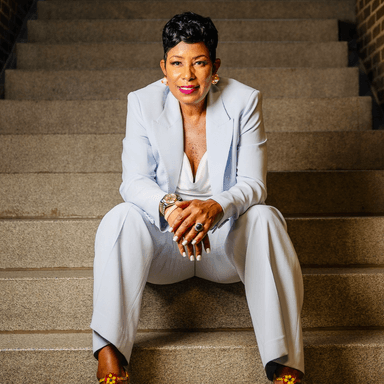
Kimberly S. Reed
Diversity, Belonging and Culture Executive, Author and Global SpeakerReed Development Group
Skills
About
Kimberly S. Reed, CDE® is a Culture Futurist, Founder of Reed Development Group, and a trusted DEIBC (Diversity, Equity, Inclusion, Belonging & Culture) executive advisor, keynote speaker, and bestselling author. She partners with C-suite leaders and boards to embed belonging, culture, and equity into the DNA of their organizations—transforming culture from an aspiration into a measurable driver of performance, trust, and sustainable growth. From Boston to Dubai, Kimberly has stood on global stages, facilitated international summits, and led courageous, often uncomfortable conversations with one clear purpose: helping organizations move beyond performative commitments toward purposeful, accountable, and lasting change. Kimberly is a member of the Rolling Stone Culture Council, an invitation-only collective of global influencers and changemakers shaping the future of culture, leadership, and innovation. She is also affiliated with RedBoxMe, in collaboration with Cartier—an innovative platform redefining how leadership, art, philanthropy, literature, sustainability, and design intersect through culture and human connection. Recognized by Marquis Who’s Who® for her global influence and strategic leadership, Kimberly Reed is a two-time Global Influencer with DIGITALCONFEX, engaging executive audiences across Dubai, India, Malaysia, Singapore, and Amsterdam. In 2025, she was named a Philadelphia Titan 100 Honoree, recognizing CEOs and C-suite executives who exemplify vision, influence, and industry-shaping excellence. A bestselling author, Kimberly wrote Optimists Always Win! — Moving from Defeat to Life’s C-Suite (Simon & Schuster/HCI Communications). One hundred percent of the book’s proceeds support cancer charities, reflecting her deep commitment to purpose-driven leadership and social impact. Kimberly is a member of the Washington Speakers Bureau (WSB)—the world’s largest talent agency for corporate and leadership events—joining a distinguished roster of global leaders, Fortune 500 executives, bestselling authors, and cultural innovators who inspire action and drive results. Her work sits at the intersection of leadership, belonging, and the future of work, guiding global organizations through disruption with clarity, courage, and cultural intelligence. She helps executives make culture the engine of innovation, trust, and long-term value creation. Kimberly defines this moment as When Culture Leads: The New Leadership Revolution Reshaping 2026—a transformative era in which culture, not charisma, becomes the true source of competitive advantage. Today’s leaders are no longer just managing organizations; they are curating communities, shaping identity, and building ecosystems where people and performance thrive together. As a trusted advisor to executives and enterprises, Kimberly specializes in turning culture into a strategic asset—one that accelerates engagement, strengthens trust, enhances performance, and positions organizations to lead what’s next. Kimberly serves on several high-impact boards and advisory councils, including the Nasdaq Center for Board Excellence, Titan 100 Philadelphia, and Temple University’s College of Education and Human Development Board of Visitors. Her work is grounded in service, legacy, and leadership. She is a proud member of The Links, Incorporated, one of the nation’s oldest and largest volunteer service organizations of accomplished African American women, and Alpha Kappa Alpha Sorority, Incorporated, a global sisterhood of more than 325,000 members committed to service, scholarship, and impact. Kimberly has a B.A. in Political Science with a concentration in International Relations and Public Administration from Westchester University and a Master of Education, Adult Organizational Development and Public Policy from Temple University. She also has received her certification in Global Organizational Leadership, Human Resource Management, Temple Fox School of Business and received certifications in Training and Development and Communication and Conflict from Temple University.

Kimberly S. Reed
Published content

expert panel
In industries that never stop evolving, the most effective leaders find sustainable ways to stay curious, adaptable and intentional about their learning. From new technologies and shifting audience behaviors to changing business models and cultural trends, professionals today are expected to absorb more information than ever before. But constant learning can quickly become exhausting if it turns into nonstop consumption without reflection, focus or boundaries. The key is building sustainable habits that encourage curiosity while protecting mental clarity and creative energy. Below, Rolling Stone Culture Council members share how they continue learning and evolving in fast-moving industries without becoming overwhelmed by the pace of change.

expert panel
The difference between simply being seen online and truly being remembered often comes down to consistency, purpose and the ability to deliver meaningful value over time. Today's ubiquitous access to social media means every company has the tools to capture audience attention. But attention alone doesn’t create trust, loyalty or long-term influence, and lasting brand value requires far more than clicks, views or fleeting moments of virality. For leaders, creators and businesses alike, the challenge is shifting from short-term engagement to long-term identity. Below, Rolling Stone Culture Council members share how they distinguish between building a brand and chasing attention and why that distinction is critical for sustained success.

expert panel
In crowded, fast-moving industries, success often comes from following simple, hard-earned advice that reshapes how you think and act. Breaking through in a competitive field can feel overwhelming, especially when everyone is chasing the same opportunities, audiences and recognition. While there’s no single formula for success, many leaders point to one piece of advice that changed how they approached their work, whether it shifted their mindset, clarified their priorities or gave them the confidence to move differently. What makes that advice powerful isn’t just what it says, but how it reframes the journey. Below, Rolling Stone Culture Council members share the most impactful guidance they’ve received about succeeding in competitive industries and why those lessons continue to shape how they show up today.

article
Culture may be the celebrity of 2026, but trust will be the headline act.

expert panel
In industries defined by constant change, effective succession planning means preparing leaders not just for today’s challenges, but for a future that may look entirely different. Traditional succession planning often assumes a degree of stability — clear career paths, predictable skill progression and roles that evolve incrementally over time. But in creative and fast-moving sectors, those assumptions rarely hold. New technologies, shifting audience expectations and emerging business models are continuously redefining what leadership actually requires, and the skills that made someone successful yesterday may not be enough tomorrow. This creates a unique challenge for leaders: How do you identify and develop future leaders when the target is constantly moving? The answer often lies in focusing less on rigid roles and more on adaptability. It also requires building systems that surface emerging talent early, create opportunities for experimentation and encourage continuous development rather than linear advancement. Below, Rolling Stone Culture Council members share how they approach succession planning in dynamic environments, along with practical steps leaders can take to future-proof their teams while still meeting the demands of the present.

expert panel
Sometimes the most powerful leadership lessons are straightforward reminders that reshape how you lead in small, consistent ways. In the day-to-day demands of running a team, it’s easy to overlook the habits and mindsets that shape culture, trust and performance. But often, a single piece of simple, actionable advice can shift how a leader communicates, prioritizes and supports their people. These small changes tend to compound over time, influencing everything from morale to results. Below, Rolling Stone Culture Council members share the simplest advice they’ve received that made the biggest impact on how they show up for their teams and why those lessons continue to resonate in their leadership today.


Company details
Reed Development Group
Company bio
Reed Development Group is a progressive, multi-disciplinary Diversity, Equality, Inclusion, and Belonging (DEIB) consultancy that partners with executive leadership to embed inclusion into the DNA of their organizations. Through strategic advising, leadership development, and transformative frameworks, we help global companies build cultures where belonging drives performance, trust fuels innovation, and every leader becomes a catalyst for change.